Thursday, December 8, 2011

Compare “Arrival of a Train” and “Damsel in Distress” as they relate to Realism, Classicism and formalism

1.      There is a vast difference between the camera work in “Arrival of a Train” and “Damsel in Distress”. “Arrival of a train” just has one angle and is a static shot. “Damsel in Distress” has multiple angles, varying from wide shots, close ups, and mid shots. “Damsel in Distress” also has camera movement, for the camera tracks the dog, the train as it is stopping, and the man riding on the bicycle.

2.      There are also major differences in the edit of “Arrival of a Train” and “Damsel in Distress”. “Arrival of a Train” has a hint of realism, in its maintaining of a longshot for 50 seconds. This may not be intended to be realism, but the mere lack of editing technology in 1895. The “Damsel in Distress” can be classified as a Classical film. There is cutting to continuity in the fast edits that hold shots for only 2-3 seconds. There is a focus on cause and effect relationships. For example when the damsel blows her whistle the dog gets up in the other shot. There is also cutting for dramatic intensity. The film cuts from the damsel, to the train as it gets closer and closer. It goes between close ups, and mid shots to portray the helplessness of the situation. Then the film cuts to a wide shot, so that the audience can see the train seem to run the damsel over.

3.      In the “Arrival of a Train” there is no specific narrative the director intends the audience to focus on. The audience can create their own story on who ever they wish to, because of the wide angle shot focuses on everyone. This has a realistic effect to it, because the audience chooses the character they want to focus on. The narrative of “Damsel in Distress” focuses on the Damsel, and how she is saved. The camera cuts to close ups of the Damsel, which causes the audience to focus on the Damsel. When the camera focuses on the train the director wants the audience to realize that the train is going to kill the Damsel.

Tuesday, December 6, 2011

Article- Intensified Continuity

            In this article David Bordell explains why continuity has intensified in Hollywood cinema. Initially Hollywood cinema used wide angle shots, and had a long average shot length. The average lens used was around 35mm, this became the standard, because directors liked deep focus to get every part of the design of the scene in a single shot. Over the years Hollywood cinema has developed faster editing, and the use of narrow lenses.
“Singles allow the director to vary the scene’s pace in editing and to pick the best bits of each actor’s performance.” Initially cinematographers used a two shot sequence to film a movie. This slowly became replaced with the single shot. A single shot is usually a close up or medium shot that isolates one actor from another. This technique is used in common day film in conversation. There are two single shots on a subject and a wide shot on both subjects. The wide shot has not died, for editors still cut back to wide shots. The reasons for single shots were because editors wanted more shot variety to work with, and multi-camera shooting became more popular. An editor was able to have close-ups and a master shot sequence, so that he could express his own artistic style in picking which shot to use. Single shots also highlight the character’s acting and creates attention on the specific character on their dialogue or reaction. Single shot technique further develops the desire to create a relationship between characters and the audience.
“During the 1980s, the B camera was frequently a Steadicam, roaming the set for coverage, and the fluidity of its movement around static actors may have made circling shots and push-ins good candidates for inclusion in the final cut.” When Hollywood first began, only a single camera was used, and a scene would be reacted multiple times to get a variety of angles. Multiple camera shoots would only be used rarely, such as, when a building crumbled, or a crash sequence, where there would only be one shot to get the camera right. Steadicams then began to be introduced to create more movement in the film to grab the attention of the audience. Movement draws the eyes in more than a static shot. Over the years shooting has become more expensive, and the timelines have become shorter, that is why most films use a multi camera shoot. One director stated “one of them must be getting something good”.
“Interestingly, this more outré technique doesn’t prevent us form comprehending the story.” The unconventional technique of over narration does not prevent the audience’s understanding of the story, as initially thought. Close-up, narration, and fast cutting brings us closer to the characters. In this way the style of today has changed in its ability to further involve the audience. Close ups and movement interest the audience, and therefore create more interest in the story line. The audience enjoys being told the story, rather than from a narrative. This can be seen when breaking the 4th wall. The character is constantly giving information to the audience, which forces the audience to pay attention. The breaking of the fourth wall also creates a higher sense of linkage between the audience and the main character, for the audience is being addressed on a personal level. The popularity of today’s techniques are seen in short films, where the director must portray as much emotion and develop the plot as possible using fast cutting and close-up techniques.
The old film style has been lost with today’s style. The audience is told what to concentrate on with the use of close ups that isolate specific characters. There has become more involvement of the camera and less involvement of the actors. Isolating specific parts of the body can portray emotions. For example, a women tapping her fingers on a table can portray her as impatient and anxious.

Monday, December 5, 2011

Short Film Critique: Bridge

Rationale:
            The film that we made was called Bridge. The film falls under the genre of drama, and running. What we wanted to do was show that the main character Julian loses his desire to run because of his ACL injury. Then he meets a girl Sasha, who is overcome with a terminal illness. Her perseverance through her terminal illness inspires him to run again. We desired the audience to be young adults and adults. We thought it could be inspirational.

Commentary:
            My area of responsibility on the film was the cinematographer. This is the third time I have played the role of cinematographer in a short film. This is the second time I have used a cannon 7D. My goal as cinematographer is to get the best shots that reflect the story the best. Therefore me and the director thought out at least half of the shots together. We compromised and clashed on what we would think would best fit the end result of the film.

            We choose to use the cannon 7D because of its ability to record 1920x1080 footage and its ability to interchange lenses that give different depths of field. The 7D is a very complex piece of equipment and even I question my ability to use its abilities to the fullest. Many problems and challenges involving the 7D have come up in the past. We have constantly had problems with audio, and the 7D’s lack of a good audio recording system. On my last project I experienced challenges with the sound, due to my own personal error, and static that would come across in every piece of audio. I decided to use the 7D this time despite our problems with audio, because we received a H4n zoom. I initially thought that I would just have to attach the H4n to the cannon 7D and not have to synchronize the audio in post-production, but I was sadly wrong. It was an error that I take responsibility for, because the audio ended up having static. This would have been prevented if I had recorded the audio on the H4n and synchronized the audio alter on, but I was too lazy.

            There were also challenges with the steady cam rig that we had. This was the first time I had used the steady cam rig on an actual shoot. I spent around 3 hours practicing the perfect technique to get the steady cam right. I still feel that there is room for improvement, for the shots are not as steady I as I would have liked them to be. I am still trouble shooting what I should do next time I shoot my final short film. I was also scared that the bridge police would not let the steady cam rig on the bridge, because it looks like a bullet proof vest. Luckily the bridge patrol did not say anything about our rig.

            Since I was responsible for the gear, and knew how much gear we needed to shoot with, I did not think that the bridge police would let us film on the Golden Gate. We were not kicked off the bridge, due to the compactness of the 7D and its ability to look like a normal camera. The bridge police initially thought we were just taking pictures until we took out the boom mike. Because we were filming on the bridge, we ran into heavy foot traffic, because it was a rare clear day on the Golden Gate Bridge. This may have caused some continuity errors in the final version of the film, but I could not stop the foot traffic.

            A problem that arose with our group was finding a hospital to shoot our scene when Sasha tells Julian that she no longer has the desire to live. We tried two different hospitals within our area, but they rejected us because of privacy issues of clients. We ended up getting an offer to work at a teen health center in Daily City, but were unable to use the location because the director was only able to give us an hour to shoot. We finally were left with our last resort, and filmed at our friend Kalena’s house. We were lucky that she was able to allow us to film in her room last minute, and that her parents had no problem using her room as the set. Using a house caused us to lose our desired production design of the hospital, but ultimately turned out successful. During the shoot, the versatility of the 7D came benefitted the shoot. There was one shot that I wanted to do, but the room was too small. So I had to put the 7D against the wall and use a mirror to check my focus. I was able to get the shot perfectly, but if we had used a real film camera the shot would not have worked. We tried to add production design in the flowers that we bought, but were unable to fully incorporate them into the final product.

            As a whole group we ran into a major problem in the beginning of our production. We were initially supposed to use real actors that we found off of craigslist, but our actors fell through due to the last minute urgency of our project. At the last minute John gathered four girls together for a screen test. Max was unable to attend the screen test because he had a football game. The two strong actors were either Payton or Sharmane. The next day we showed match the footage and as a group we ended up choosing Sharmane. The topic of who the male actor came into dispute the next day. Max choose an actor that he knew, and we met him in Golden Gate Park. At the park there was a brief argument between Max and John over who the male actor would be. There was an argument over whether or not time would be a factor in the production schedule. In the end Max decided to use John as the actor over the male actor he found. This was because the male actor that Max intended to use was about 6 years older than our female actor, which would make the film a little awkward. In the end max decided to use John as the male actor.

            We had a lot of people help us with production, and we were lucky that they were able to help us. Issa helped us take behind the scene shots, and Luke helped us with audio and helped put his input into how the scene should look. Next time we need a person that can specify on audio, so that I do not have to constantly worry about audio and focus more on the cinematography. We will probably use Luke in our next and final film project as our audio technician.

            After six weeks of production we eventually finished our short film. I was proud of our work and admired the finished product. Although I felt the film was good in many ways there was still much more room for improvement. I think that we were somewhat successful in portraying what we wanted to portray in the story line. I think that there could have been better character and situational development between the characters. There could have been more dialogue. It was difficult for some people to initially grasp the concept of the film, and this is what we were trying to do. Max said he wanted it to be “poetic”, and I agreed and enjoyed the idea that in the end the audience decides for themselves what happens to Sasha. Does Sasha still have her terminal illness, or is she being cured and that is what allows her to run in the final scene.

            I personally felt that there was too much running. We could have developed the characters further through dialogue, instead of showing the character development though running. Running can be dragging and cause for a loss of interest of the audience toward the characters. I personally felt that we exhausted many different types of running shots. In the end our film was successful in its ability to portray our intensions.

Advanced Editing Notes: 3. Soviet Montage and 4. Realism

          The soviet montage and the formalist tradition are two types of editing. Pudovkin’s concept of constructive editing was that each shot made a new point. He felt that juxtapositions of different shots would allow new meaning. The style manifested itself on film because Pudovkin used montages and put close ups in order to create a greater meaning.

            Lev Kuleshov was Pudovkin’s mentor and felt that actors had no talent, but it was the film maker who had the talent. This was called the Kuleshov effect where actors were mere tools, and did not contribute to the artistic expression. He focused on juxtapositions and how they create emotional meaning. He felt that long shots were unnecessary, and close-ups with juxtapositions created the most emotional meaning. This effect can be seen in today’s films in documentary films. Documentary films usually involve unprofessional actors, yet the films are still able to create emotional meaning.

Eisenstein’s montage was about constant change. He wanted to produce contrasting images. It works in the “Odessa Step” sequence because there are short cuts between different images throughout the sequence. Long shots are not often seen, but rather short and fast paced cuts. He is able to portray emotion of sorrow in the situation by quick cutting between distressed faces and dead bodies on the steps. It is used in today’s films by the montage style. Most movies have montages to show the progression of time, and the subtle differences of change that occur. A montage is able to accomplish an idea that takes 30 minutes to portray into 2 minutes of close cutting that shows the development of the character.

Andre Bazin was an editor, who criticized formalism and classical editing. He believed that formalist techniques violated reality; therefore, it destroyed the effectiveness of the scene. He believed in the montage technique. Bazin believed that ambiguity was the best way to portray reality. He felt that there was more involvement from a realistic style over a classical style, for a classical style was predictable and didn’t involve the audience’s consciousness. Realistic editing involved the audience’s consciousness because the cuts were more based on real life.

Realist film makers strive to use long shots, wide screen, lengthy takes, deep focus, panning, craning, tilting, or tracking rather than cutting to individual shots. The film must maintain continuity of real time and space.

A favorite technique of realist film makers was deep focus photography, because it doesn’t give special attention to certain characters, like a close up does. They feel that everything must be included, and that there should be no sacrifice with detail.

Friday, November 11, 2011

Trailer-Review

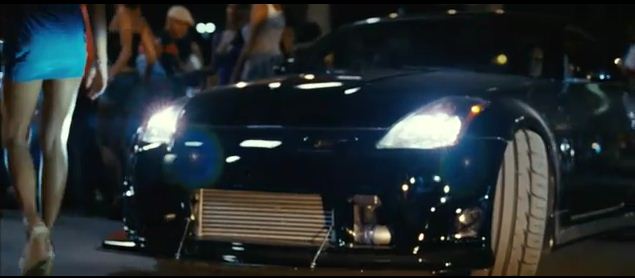
The trailer that I reviewed was the Fast Five trailer. This is the fourth movie of the Fast and Furious film series. This movie came out during the summer of 2011. Fast Five is based around street racing and how it has carried on into other parts of the world. This movie highlights the illegal aspects of street racing; such as, stealing cars, racing, and the police. I choose to review this trailer, because I enjoy the fast paced action portrayed in the trailer.

This trailer, like any other trailer, establishes the narrative of the movie. It establishes that the movie will take place in Rio De Janeiro, Brazil by using a fly over shot of Rio’s famous statue that sits on top of the mountain. The movie then reveals a sweat shop where money is being counted for drug dealers. It then introduces guns and police voice (Dwayne Johnson) to establish a conflict with the police and the main characters. Dwayne Johnson says “Don’t ever let them get into cars”, which highlights what fast and furious is known for, which is street racing. Vin Disel says “we will do one last job and then disappear forever”, suggesting that this is the last movie of the series. This quote is followed by a series of expensive cars being stolen off a train, establishing that the characters will steal in order to make their money. The trailer also reveals the old characters from prior movies who are back. This movie hints that Han did not really die in the seemingly fatal car accident during Tokyo Drift, or that this series takes place before Tokyo Drift.

The cinematography adds to the high paced action expressed in the trailer. The fast and close up shots of the cars displays that the cars will being going fast in the movie. The track over the police lights while Dwayne Johnson is speaking establish Dwayne Johnson as the police who are after Vin Disel and his men. The P.O.V of the rocket launcher explosion adds to the action of the movie. The close up of Vin Disel and Paul Walker’s hands as they hook their winches onto what seems to be two metal bars. This creates curiosity in not displaying what they are hooking onto. Then a wide shot shows that the metal bars where actually part of a metal vault that is being pulled by two cars.

The editing is what makes the trailer a high paced trailer. One of the best techniques is used at the end of the trailer where there is fast editing between different scenes that intertwine with a heart beat. As the heart beats become faster the cuts become faster and finally reveal the name of the movie.

The sound is also a crucial part when creating  trailer, for it helps to reveal the situation and synchronizes with the action. In the beginning the cliché sound of a shotgun adds to the intensity of the robbery scene. The fast paced music that is infused with the sound effects of squealing tires reveals the fast plot and cars.

Monday, October 3, 2011

Run Lola Run Presos Critique: Editing

run lola run preso
The area that my group and I explored in Run Lola Run was editing. The editing style that I found Run Lola Run to be based off was a formalistic style. This film was a formalistic movie because it defies most classical editing techniques. One of the first things that makes this a formalistic style is the repeat of the same sequence of time 3 times by Twyker. There is a manipulation of time, because are 3 Acts of the same plot where the characters progress and realize their mistakes as the movie progresses. Formalism is also seen in the use of thematic montage of still frames. The abstract of formalism is also emphasized in the use of animation. One significant use of animation is when an animated character pulls the frame in just before the camera does a 360 around Lola as she thinks of who to ask for money. I also found the abstract to be in the breaking of the fourth wall by Papa shaking his head as Lola runs out of the frame. I also addressed parallel action and split screen. Parallel action and split screen are used in points of high tension, for example when the money bag and the phone are falling after Lola gets shot. I lastly examined cutting and how there were around 1500 cuts in Run Lola Run.

I had some strengths in my presentation. I think one of my strengths was that I was able to not rely heavily on my notes. I was able to expand on my pictures and talk relative to my topic. I think I was also able to provide good facts about the movie, such as the average shot length of 2.7 seconds. I was also to have a somewhat good sense of film language.

I also had some weaknesses in my presentation. I feel that I did not use enough film language. This can be solved by further studying the advanced editing notes. Sometimes I strayed off topic with the breaking of the fourth wall, because it is not really an editing technique. I sometimes also said like and ummm, and I also didn’t always look at the audience when I was talking. I looked too much at the screen and not the audience.

Thursday, September 29, 2011

Film Treatment: Sands

Film Treatment: Sand

Logline: Boy is running through San Francisco attempting to tell his best friend that he likes her. Boy breaks fourth wall.

Girl and boy are sitting on a beach near sunset. They are looking out into the ocean. Girl says “look at this sand in my hand”. She cups the sand and lets its slowly siphon down until there is no more sand. She says this sand is like time it eventually runs out for all of us. The question or not is how we live our lives to the fullest. As the guy and girl leave the beach they part ways.

As the boy walks home he breaks the fourth wall and tells us about his life. His name is Tom and the girl’s name is Kelly. He and Kelly have been friends ever since they were small kids. Flash back to smaller kids on a play ground and they meet each other and are instantly friends after. Tom is a junior in high school and Kelly is a Senior. He and Kelly always enjoy each others company and they spend a lot of time with each other and their other friends.

Show progression of shots to show that the year is going by and then the year is almost over until it is summer time again. Tom and Kelly are on the beach again. Kelly tells Tom that she is going to leave tomorrow for college. Tom is sad but says alright and when they part ways they say good bye to each other.

The next day when the boy gets up his mom leaves a pile of pictures on his desk. Tom looks through the pictures and finds an old picture of him and Kelly. He breaks the fourth wall and tells the audience that he realizes his feelings for Kelly and wants to tell her before she leaves at 12 pm for UC Irvine. It is 11:00 pm and the boy realizes he must go to Kelly’s house fast so that he can tell her his feelings.

Tom runs out of his house and runs down the street. He finds the bus stop and waits as he looks at the time to make sure that he is not going to be late. As he is running he is having flashback memories of all the good times that he and Kelly had together. Tom encounters obstacles on the way and then he doesn’t make it in time to tell Kelly his feelings. He is sad but tells the audience that he tried his best and ended up failing.