Logline: An old man that is stuck in the past tries to change modern youth by radical means.
An old house with a neat front lawn. An old man wearing khaki pants, a navy blazer, and a duck billed hat steps out of the front door onto a wooden porch. He relaxingly closes the door, walks onto the sidewalk and proceeds to begin his daily tasks.
The old man walks casually down the street, calmly observing the neighborhood around him. He glances over to the other side of the street and sees a pair of young kids playing with a handheld game, eagerly looking over each other’s shoulders. A deflated red ball sits just a few meters away from where they are sitting on the sidewalk.
A red ball is kicked. Children’s laughter is heard.
The old man, slightly disappointed, continues on his walk as he does everyday. This is nothing new to him.
The man arrives at old fashioned coffee shop. He lethargically opens the door. The waiter behind the counter says to the old man “good morning Bob” the old man replies “good morning”. “black coffee like always?”. “Yes, thank you”. The waiter then asks him “Are you sure you don’t want to try our new espresso?” The old man grunts. The old man takes out some crumpled old dollars and places them on the counter. The waiter puts the daily newspaper on the counter in exchange. The old man takes the seat of his choosing. The waiter puts a napkin and his coffee on the table. He grabs the daily newspaper, and opens it up. In the corner of the of his eye he sees a group of people paying without giving a tip. He waves the page in front of him to reestablish his vision.
The old man is sitting in a park playing chess with a friend. He moves his queen in place and declares checkmate. In the background, kids are playing basketball. Suddenly, a basketball strikes the chessboard. A teenager runs past the two old men to retrieve the ball. The two old men yell in protest but the kids smirk and continue their pick up game.
The old man opens up the front door to his house and hangs up his jacket. Immediately an old phone begins to ring. He walks into the kitchen and picks up the phone. His son tells him how he and his son are supposed to come over that same day. He walks over to the refrigerator, glancing at some old photos. In passing his son asks about how that computer he sent him is working for him. The old man glances at a computer monitor sitting next to the garbage can in the front yard. The old man says fine.
The old man opens the front door for the dad and his son to walk in. The kid is texting on his phone even as his dad tells him to put it away. They exchange greetings.
At the dinner table dad and grandpa quietly eats while the kid is still texting on his phone. Dad seems to not be disturbed with his son texting at the table. Old man firmly asks the kid to put his phone away and that its rude to be on the phone at the dinner table. The kid reluctantly puts his phone on his lap. Dad suggests that the two of them go to the park together, for a little bonding time.
Old man and the kid are sitting a few feet away from each other on a park bench. The old man reaches into a small plastic bag and disperses some bird feed to the pigeon. The kids seems very bored and irritated. The old man offers the kid the bag, but instead he pulls out a gaming handheld. The old man turns back towards the birds and continues feeding them.
The kid is sitting in front of the TV set trying to set up his game console. The old man is sitting in his chair reading his paper. The front page talks about how “technology has ruined modern society”. However, when he looks to the rear of the TV set, he discovers that the game system is not compatible with the TV. The kid screams at the TV displaying static in frustration. Suddenly, the old man gets up, picks up the game console, and thrusts it on the floor. The kid, in utter awe and confusion, is yanked by his father while he is yelling at his dad (old man) about how . . .
The old man stands confused and unsure of himself as dad and son pack up to leave. The door closes on the old man, still dazed by the unfolding of events.
Tuesday, February 14, 2012

Short Film Treatment: Rubik's Cube
Logline: A man has lost all his passions, a women tries to make him see the happiness and joy in life.
A man and a women wait at the same bus stop every single day for the past year. The man is dressed nicely in a suit, and the women is dressed nicely for her job. The man has a somewhat cynical view on life, he views life as pointless, but he lives life so that he doesn't hurt his family. The woman one day finds a rubiks cube. She tries to solve the rubiks cube but can only get one side. After a month the guy becomes so annoyed that he grabs the rubiks cube out of her hand and solves it quickly, then hands it back to her. She becomes interested in him and follows him onto the bus.
She decides to sit next to him on the bus and tries to talk to him. She asks him who he is and what he does? Over the next week she pesters him but he is solid and wont tell her. Finally he tells her it doesnt matter what he does. It doesn't matter what he or she or anyone ever does because we are all eventually going to die. She pulls out the rubiks cube and tells him that life is like a rubiks cube. Most of the time life cant be solved, its complicated, there are problems, we have struggles. Rarely does anyone solve a rubiks cube, just like how rarely people solve life and are completely content. She asks him that although we all eventually die we should live life to have joy and experience happiness.
A man and a women wait at the same bus stop every single day for the past year. The man is dressed nicely in a suit, and the women is dressed nicely for her job. The man has a somewhat cynical view on life, he views life as pointless, but he lives life so that he doesn't hurt his family. The woman one day finds a rubiks cube. She tries to solve the rubiks cube but can only get one side. After a month the guy becomes so annoyed that he grabs the rubiks cube out of her hand and solves it quickly, then hands it back to her. She becomes interested in him and follows him onto the bus.
She decides to sit next to him on the bus and tries to talk to him. She asks him who he is and what he does? Over the next week she pesters him but he is solid and wont tell her. Finally he tells her it doesnt matter what he does. It doesn't matter what he or she or anyone ever does because we are all eventually going to die. She pulls out the rubiks cube and tells him that life is like a rubiks cube. Most of the time life cant be solved, its complicated, there are problems, we have struggles. Rarely does anyone solve a rubiks cube, just like how rarely people solve life and are completely content. She asks him that although we all eventually die we should live life to have joy and experience happiness.
Wednesday, January 18, 2012
Ideologies in Film
1. Ideology originates from politics and economics. Ideology is a certain set of beliefs. Ideology comes in the two forms of explicit and implicit. Explicit ideology is when the beliefs portrayed in the film are obvious. Implicit ideology is when the beliefs become debatable in the film, and beliefs are not obvious. The ideology must be examined through reason and arguments.
2. Jason Statham has a predictable ideological package of a man who always manages to attain revenge on those who harm him or his allies. Some of his highly action packed films are: The Transporter, Collateral, Crank, War, Death Race, The Expendables, Blitz, The Mechanic, and Killer Elite. In the Mechanic he played a role as one of the best assassins in the world. He raised young man to become just like him. The young man almost killed him, but Statham was able kill the man. Jason Statham’s typical characters can be described as: violent, fierce, calm, dangerous, and ruthless. His next role will have him as an expert killer. He will fight many people to overcome a challenge and will succeed.
3. A film that I have recently enjoyed was the movie Source Code. My favorite character in this film was Colleen Goodwin played by Vera Farmiga. I liked that the director drastically developed the character of Goodwin. She remains calm and collected whenever speaking to Colter, and only wants to fulfill her job. She becomes empathetic toward Colter, for she notices his suffering in being used as a tool. Her empathy causes her to fulfill Colter’s wish by killing him, and allowing him to live in a parallel universe. The values I am being asked to share are the importance of human empathy for one another. My feelings are being manipulated due to the slow cuts, and meticulous music as Goodwin kills Colter. The artistic consequence is that the movie is forced to have a happy ending. There is little financial consequence, for most people will see the movie because of its happy ending.
4. Ideologies change the way a narrative is presented to its audience as the time and era changes. This is because human ideology, values, and morals are constantly changing. The film The Graduate made in the 1960s was controversial for its time. People were not used to love interests between older women and younger men. Many people were conservative and rejected the nudity. If the movie was shown now, people would not reject it. The modern era is less conservative. It has become normal to have movies that contain nudity and sex scenes.
5. I do feel that films can affect you and your behavior without being conscience of it. Ever since I was little I have watched many a Disney feature. These movies contain morals, and values that teach children right from wrong, bad guys from good guys. When examining the film Friend with Benefits the initial explicit ideology revolves around sex. As the movie progresses the ideology changes to holding onto important relationships.
6. Suspension of disbelief is when we accept something as real when we do not fully know that it can be real. An example of suspension of disbelief can be applied the film Source Code. There are many gaps in the film that blur the line between reality and fiction. The first gap is seen in the idea of a parallel universe through quantum mechanics. In theory it is plausible, but no one knows for sure that a parallel universe exists. A second gap that I noticed was the evacuation of Chicago. There was barely anyone in Chicago within 2 hours, because everyone had evacuated. This is impossible, because not everyone can evacuate Chicago within 2 hours without a heavy amount of traffic, and looters.
7. Financial support of a film and the ownership of a production company greatly influences the ideology represented in film. This is why so many American movies end with cliché happy endings. A prime example would be the movie I am Legend. According to cracked.com Neville (Will Smith) was never supposed to die. The vampires were actually benevolent creatures who just wanted back another vampire that Neville captured. Audiences didn’t like the ending, therefore it was changed to the current one where Neville must commit suicide to save his allies.
Tuesday, January 17, 2012
Genre Study
1. Drama- Martial Arts
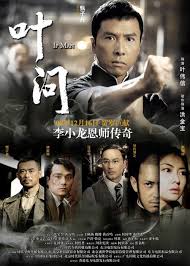
2. IP Man
The Karate Kid

Warrior

3. Narritive Conventions
The typical narritive conventions starts out with a single hero. The hero is usually male. The hero is usually supressed, and does not have heroic characteristics. The hero runs into a problem, and someone helps him solve that problem. In order to solve the problem the hero must fight in an event or competition. The hero trains hard, and eventually wins the competition. The ending is happy with the hero accomplishing his or her goals.
4. Defining Conventions
2. IP Man
The Karate Kid
Warrior
3. Narritive Conventions
The typical narritive conventions starts out with a single hero. The hero is usually male. The hero is usually supressed, and does not have heroic characteristics. The hero runs into a problem, and someone helps him solve that problem. In order to solve the problem the hero must fight in an event or competition. The hero trains hard, and eventually wins the competition. The ending is happy with the hero accomplishing his or her goals.
4. Defining Conventions
The typical situations: The main character tends to face a challenge. Winning a fight will help the main character overcome the challenge. In IP Man the General wants IP Man to teach Wing Chun to the Japanese army. IP Man needs to fight Miura to protect Chinese dignity and the art of Wing Chun. In The Karate Kid Daniel needs to learn martial arts to fight of bullies. In the Warrior Brendan and Tommy both need the money to help their families.
Typical characters: The main characters in martial arts movies are men. This is because the films conform to the stereotype of men as fighters. The films are also expect men to see martial arts movies. There are usually female characters that aide the men in these movies. These female characters can sometimes have revealing attire to appeal to the male audience. A counter to the typical male character is Million Dollar Baby, where Hilary Swank plays the role as the main fighter.
Typical dress: Dress style varies with setting. IP Man and Karate Kid both wear Asian martial arts attire. Where as the characters in Warrior wear TAP OUT attire. The dress can be revealing and typically displays the area above the waist. The characters are portrayed as strong, for they typically have six packs and ripped muscles.
Typical Setting: The typical setting varies with each movie. A majority of the movie usually takes place in a place where the main characters train. This can be a dojo, a boxing ring, or outside. Different seasons are sometimes used to show the progression of the main character as he trains.
Typical objects or equipment: There is always training equipment. A common piece of training equipment would be a punching bag. The equipment is based on the setting; thus, it is not always consistent throughout the genre. IP Man and Karate Kid have minimal equipment, where as, Warrior has more equipment. Warrior contains punching bags, jump ropes, punching gloves, and weights.


1. Family comedies
2. The Pacifier
Cheaper by the Dozen
The Game Plan
3. Narrative Conventions
The narrative usually always follows the same general direction. The family is initially separated and does not have good relationship. As the film progresses challenges present themselves to the family. As the family overcomes these challenges their bond becomes stronger. By the end of the movie everyone is happy and loves each other.
4. Other Narrative Conventions:
Typical situations: The characters all face a certain challenge that they must overcome together. In the Pacifier Vinn Disel must play the role of the mother. In Cheaper by the Dozen the relationship of the family is strained, because some of the kids pick on the other kids. In the Game Plan Dwayne Johnson must look over a child that he never knew was his.
Typical characters: The roles vary throughout each movie. The whole family plays a role as equal main characters. Men are sometimes put in female positions to create comedy. The men initially fail, but are eventually able to succeed.
Typical dress: The dress is PG rated. The dress is not too sketchy, for the intended audiences are families of all ages.
Typical setting: The majority of the setting takes place at a house where the main characters live. The movie revolves around everyday challenges that is offered by a typical household environment.
Typical look or style: The lighting is always bright to convey positive and joyful emotions. There also tends to be high color saturation to brighten up the mood.
Romantic Comedies
Friends with Benefits
Hitch
Just Go With It
Narrative Conventions:
The narrative typically begins with a characters who look for explicit characteristics in the other sex. Their motivations are usually only sexual. The first relationship is only one dimensional. As the movie progresses the main character realizes that sexual motivations are not the only things that matter in a relationship. The main character discovers that implicit characteristics are truly important. The main character discovers that there is more to life than just sex. At the end of the movie the main character falls in love with a multi-dimensional character.
Other Narrative conventions:
Typical characters: The characters used are mainly male. Males are stereotyped as only sexual, and that is what they look for in a partner. At the end of the movie the main character rejects this stereotype and falls for the cliché of love. The characters can also be female, as in the movie Friends with Benefits.
Typical dress: Extremely revealing, and sometimes also include sex scenes. This is to appeal to the male audience, who go to the movies with female counterparts. The intended audience is typically above the age of 18.
Typical dialogue: Dialogue is usually inappropriate. Since it is a comedy there is a heavy use of sexual innuendos. Swearing is often used.
Typical body language: It is usually seductive or revealing. Body language may also become awkward to add humor to the scene.
Typical look or style: The look or style is often bright and highly saturated. This is done to convey feelings of happiness and joy. A tone of jubilance is created. People are not able to laugh when there is a melancholy tone.
Tuesday, January 10, 2012
Writing about Film
The first form of film writing described in the article is Formal Analysis. It is discussing the movie as a whole by breaking up different parts of the movie, such as, cinematography, lighting, setting, acting techniques, score, etc. A Formal Analysis would be a typical analysis.
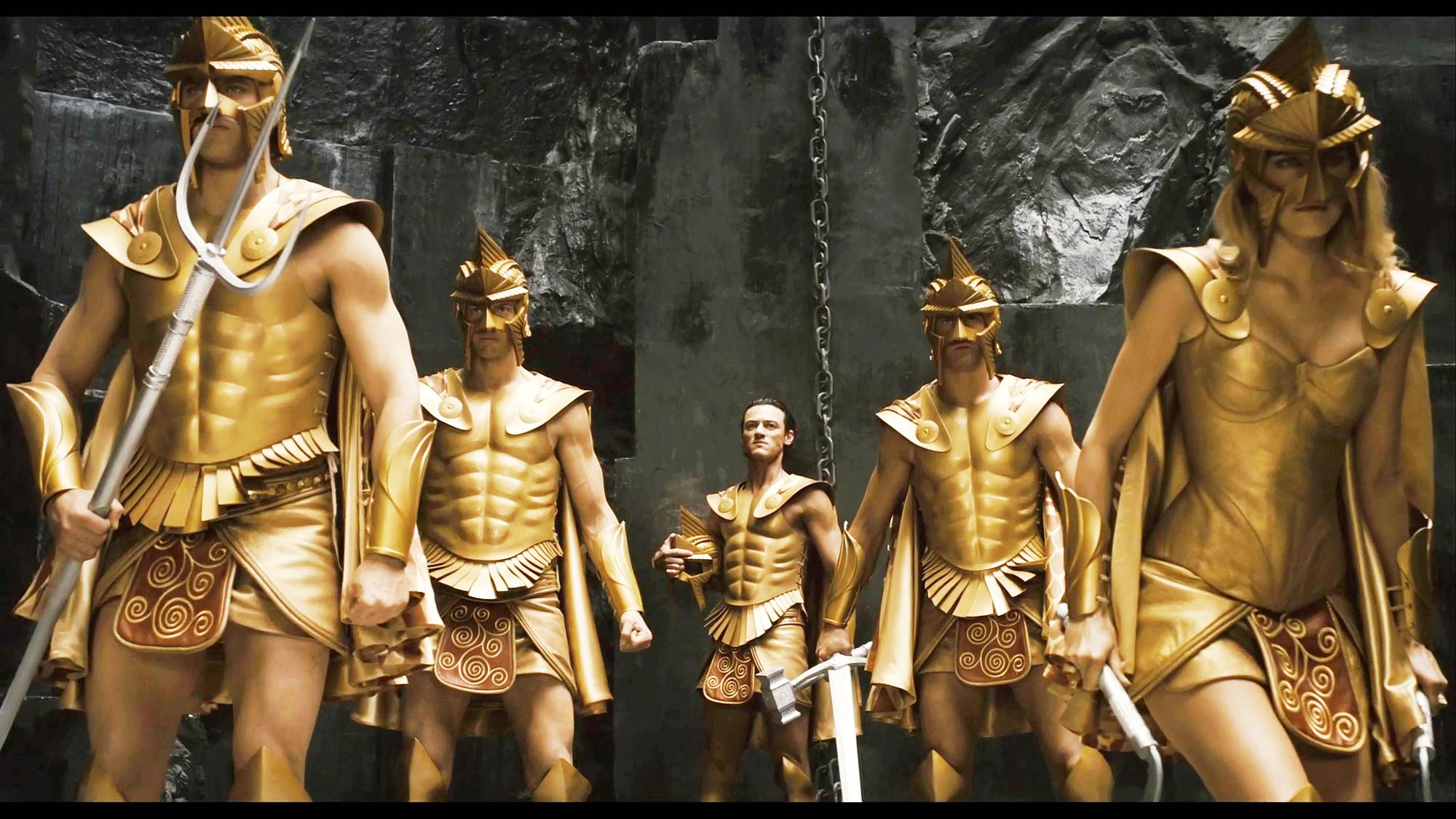
The second form of film writing is film history. All films have a history to them. They are usually based around a certain time period. For example the movie ‘Immortals’ was based around the time period of ancient Greece. This enabled them to take advantage of the mythology of the era and incorporate it into the film. Special effects were taken advantage of to display the supernatural powers of Greek Gods. Films also have production histories of problems, and reasons for why and when they were made. Film history involves the banning or wide acceptance of certain movies due to culture values or morals.
The third form of film writing is Ideological Papers. Films are created to promote a belief. When watching a film, it is important to understand that the film may being trying to manipulate our feelings about certain topics. The movie ‘Source Code’ promotes ideas of quantum mechanics and the possibility of a parallel universe.
The fourth form of film writing is Cultural Studies/ National Cinemas. This is when the films reflect the cultures and nations that they were produced in. Films are usually produced to appeal to a certain culture or society. A French filmmaker would take a different approach to a movie than an American filmmaker would approach a movie.
 The fifth form of film writing is discussion of the Auteur. This criticizes the film as the view of a single person, usually the director. When discussing Auteur one must consider that film is still collaborative, because people such as the make-up, cinematographer, editor all have a part in the final product. This form is often used. An example would be Michael Bay. Made famous for many movies, most importantly for Transformers. He is often criticized for making high paced action movies, while using women to appeal to 16 year old boys.
 Annotating a Film Sequence involves taking notes on a specific shot sequence or scene. This is beneficial because one is able to break down a scene and examine all the different parts. The editing, choice of shots, score, lighting all can be examined. It is beneficial because it helps understand why the film creates a certain effect.
When thinking beyond the frame one should consider other aspects that do not pertain to a certain shot or scene. One should question who made the film. The scene might have similar themes or motif that relate to other movies made by the same director. Production history must be considered to understand whether or not it was a big or small production movie. Read what critics have to say, and see if it aides your analysis. Examine the genre and whether or not the movie uses clichés in the genre. Is the film also interesting culturally.
Monday, December 19, 2011
Taxi Driver 5 most valuable minutes
We have recently seen the movie Tax Driver in our Art of Video class. This movie was directed by Martin Scorsese. This movie is about a man named Travis Bickle who is a Vietnam veteran. He becomes a taxi driver in New York city and feels a need to get rid of all the "scum" and "flush it down the toilet". New York city becomes a character in itself, for it is the dirty, filled with scum, place that Travis despises. The theme I found portrayed in Travis Bickle and Taxi Driver is the power and strength of the individual. The scene that I choose was the first time that Travis talks to Betsy. His boldness displays his character and personality as an individual. He is willing to do anything to get what he wants, without shame or shyness. He is abrupt and straight to the point. His boldness is reflected in later scenes, and in the end where he kills the pimp and the accomplices.


Martin Scrosese is popular film director, screen writer, producer, actor, and film historian. He made many popular movies such as: New York, New York, Raging Bulls, Mean Streets, and Goodfellas. Taxi Driver related to Scrosese's next film New York, New York in the use of expressionism. New York, New York and Goodfellas both take place in New York. Goodfellas and Taxi Driver both compare in the high amount of violence deemed by critics. Henry Hill and Travis Bickle are similar in their role as the anti-hero. Scrosese favored the use of the anti-hero.

Taxi driver falls under the thriller genre. This is because the movie is about a psychotic man, who kills a drug dealer and his accompices. Travis Bickle is mentally instable, and acts on what ever is on his mind. He believes that shoooting the presidental candidate Palentine will make him a hero. This is ironic, because a majority of the people favor Palentine, because Palentine represents the people. Travis desires to get rid of all the "scum" and majority of people that Palentine represents.
 I choose these five minutes because it portrays Travis' boldness. Travis is able to go up to Betsy without any fear and talk to her. He displays courage that is later shown when he finds Iris and kills her pimp. This scene also reveals Travis's love interest, Betsy. Scrosese adds to Travis's complex character by going against the anti-hero portrayl, to a more heroic portrayl of Travis's love for Betsy. Their relationship shows that Travis is more than a man who just wants to kill. He has feelings and desires. Travis does not cut himself off from all worldy feelings and just train to be a soldier. Betsy not only shows his complex character, but also Travis's desire to save Iris from the whore house.
This scene introduces the genre of love. The score of the trumpet always plays when Travis is thinking about Betsy. This scene also introduces Betsy. Betsy connects to history, for she is shown as a independent women. She is portrayed as intelligent and sophesticated, and she works for Palentine. in the 1970s the idea of the independent woman was becoming popular. At the same time she is portrayed as the ideal women for being blonde and beautiful.
Thursday, December 8, 2011
The American Anti-Hero
The American Anti-Hero began to rise “between 1948-1980 there was a golden age of the American anti-hero. The anti hero was rising because of post war America. Americans were uneasy and the new era of Americans were rebels against their society. “As America was scrutinizing its fellow citizens and lives were being shattered, its youth began to become disenchanted and cynical with the very idea of being good, especially when faced with overbearing authority figures”. Hollywood cinema wanted to appeal to the youth by using Anti-heroes that they could relate to. As a general population people were becoming more open to new ideas in a post WWII world. “The anti-hero was daring the audience to relate to doing wrong or being wrong even for the wrong reasons. People in general do wrong, but understanding how some we like can do wrong reflects our own misgivings and failures to do the right thing”. The anti-hero was more realistic to people, because he was not perfect, like a hero. People viewed an anti-hero as someone they could relate to. As the youth began to take on a characteristic of rebellion they focused on the need for individuality. The typical hero represents the view of a perfect society that does not have flaws. In being rebels the youth wanted to create the opposite of this by displaying individuality in going against a perfect society. They were mavericks, like the anti-hero.
The 1960s embodied the civil rights movement where the youth found injustices in racism. Captain America “rides a chopper and wears a leather jacket and helmet that all have an American flag on them. He is donning them all when he is shot-gunned down by southern intolerants. Americans killing America, in effect . . . or at least symbolically”.
The American Anti-Hero contradicts the Classical Hollywood Ideology. The classical Hollywood ideology portrays a hero that the audience favors and does good deeds. The hero always succeeds, lacks flaws, and contributes to a happy ending. The anti-hero contradicts the hero, because the anti- hero has flaws, fails, and goes against society. For example in ‘Taxi Driver’ Travis is an anti hero. Travis “is constantly at odds with these two sides of his own personality”. Travis is good-natured in wanting to protect girls from the scum that he finds as pimps. Travis is vengeful in his desire to hurt the girl who rejects him, after he takes her to a triple X movie.
Compare “Arrival of a Train” and “Damsel in Distress” as they relate to Realism, Classicism and formalism
1. There is a vast difference between the camera work in “Arrival of a Train” and “Damsel in Distress”. “Arrival of a train” just has one angle and is a static shot. “Damsel in Distress” has multiple angles, varying from wide shots, close ups, and mid shots. “Damsel in Distress” also has camera movement, for the camera tracks the dog, the train as it is stopping, and the man riding on the bicycle.
2. There are also major differences in the edit of “Arrival of a Train” and “Damsel in Distress”. “Arrival of a Train” has a hint of realism, in its maintaining of a longshot for 50 seconds. This may not be intended to be realism, but the mere lack of editing technology in 1895. The “Damsel in Distress” can be classified as a Classical film. There is cutting to continuity in the fast edits that hold shots for only 2-3 seconds. There is a focus on cause and effect relationships. For example when the damsel blows her whistle the dog gets up in the other shot. There is also cutting for dramatic intensity. The film cuts from the damsel, to the train as it gets closer and closer. It goes between close ups, and mid shots to portray the helplessness of the situation. Then the film cuts to a wide shot, so that the audience can see the train seem to run the damsel over.
3. In the “Arrival of a Train” there is no specific narrative the director intends the audience to focus on. The audience can create their own story on who ever they wish to, because of the wide angle shot focuses on everyone. This has a realistic effect to it, because the audience chooses the character they want to focus on. The narrative of “Damsel in Distress” focuses on the Damsel, and how she is saved. The camera cuts to close ups of the Damsel, which causes the audience to focus on the Damsel. When the camera focuses on the train the director wants the audience to realize that the train is going to kill the Damsel.
Tuesday, December 6, 2011
Article- Intensified Continuity
In this article David Bordell explains why continuity has intensified in Hollywood cinema. Initially Hollywood cinema used wide angle shots, and had a long average shot length. The average lens used was around 35mm, this became the standard, because directors liked deep focus to get every part of the design of the scene in a single shot. Over the years Hollywood cinema has developed faster editing, and the use of narrow lenses.
“Singles allow the director to vary the scene’s pace in editing and to pick the best bits of each actor’s performance.” Initially cinematographers used a two shot sequence to film a movie. This slowly became replaced with the single shot. A single shot is usually a close up or medium shot that isolates one actor from another. This technique is used in common day film in conversation. There are two single shots on a subject and a wide shot on both subjects. The wide shot has not died, for editors still cut back to wide shots. The reasons for single shots were because editors wanted more shot variety to work with, and multi-camera shooting became more popular. An editor was able to have close-ups and a master shot sequence, so that he could express his own artistic style in picking which shot to use. Single shots also highlight the character’s acting and creates attention on the specific character on their dialogue or reaction. Single shot technique further develops the desire to create a relationship between characters and the audience.
“During the 1980s, the B camera was frequently a Steadicam, roaming the set for coverage, and the fluidity of its movement around static actors may have made circling shots and push-ins good candidates for inclusion in the final cut.” When Hollywood first began, only a single camera was used, and a scene would be reacted multiple times to get a variety of angles. Multiple camera shoots would only be used rarely, such as, when a building crumbled, or a crash sequence, where there would only be one shot to get the camera right. Steadicams then began to be introduced to create more movement in the film to grab the attention of the audience. Movement draws the eyes in more than a static shot. Over the years shooting has become more expensive, and the timelines have become shorter, that is why most films use a multi camera shoot. One director stated “one of them must be getting something good”.
“Interestingly, this more outré technique doesn’t prevent us form comprehending the story.” The unconventional technique of over narration does not prevent the audience’s understanding of the story, as initially thought. Close-up, narration, and fast cutting brings us closer to the characters. In this way the style of today has changed in its ability to further involve the audience. Close ups and movement interest the audience, and therefore create more interest in the story line. The audience enjoys being told the story, rather than from a narrative. This can be seen when breaking the 4th wall. The character is constantly giving information to the audience, which forces the audience to pay attention. The breaking of the fourth wall also creates a higher sense of linkage between the audience and the main character, for the audience is being addressed on a personal level. The popularity of today’s techniques are seen in short films, where the director must portray as much emotion and develop the plot as possible using fast cutting and close-up techniques.
The old film style has been lost with today’s style. The audience is told what to concentrate on with the use of close ups that isolate specific characters. There has become more involvement of the camera and less involvement of the actors. Isolating specific parts of the body can portray emotions. For example, a women tapping her fingers on a table can portray her as impatient and anxious.
Monday, December 5, 2011
Short Film Critique: Bridge
Rationale:
The film that we made was called Bridge. The film falls under the genre of drama, and running. What we wanted to do was show that the main character Julian loses his desire to run because of his ACL injury. Then he meets a girl Sasha, who is overcome with a terminal illness. Her perseverance through her terminal illness inspires him to run again. We desired the audience to be young adults and adults. We thought it could be inspirational.
Commentary:
My area of responsibility on the film was the cinematographer. This is the third time I have played the role of cinematographer in a short film. This is the second time I have used a cannon 7D. My goal as cinematographer is to get the best shots that reflect the story the best. Therefore me and the director thought out at least half of the shots together. We compromised and clashed on what we would think would best fit the end result of the film.
We choose to use the cannon 7D because of its ability to record 1920x1080 footage and its ability to interchange lenses that give different depths of field. The 7D is a very complex piece of equipment and even I question my ability to use its abilities to the fullest. Many problems and challenges involving the 7D have come up in the past. We have constantly had problems with audio, and the 7D’s lack of a good audio recording system. On my last project I experienced challenges with the sound, due to my own personal error, and static that would come across in every piece of audio. I decided to use the 7D this time despite our problems with audio, because we received a H4n zoom. I initially thought that I would just have to attach the H4n to the cannon 7D and not have to synchronize the audio in post-production, but I was sadly wrong. It was an error that I take responsibility for, because the audio ended up having static. This would have been prevented if I had recorded the audio on the H4n and synchronized the audio alter on, but I was too lazy.
There were also challenges with the steady cam rig that we had. This was the first time I had used the steady cam rig on an actual shoot. I spent around 3 hours practicing the perfect technique to get the steady cam right. I still feel that there is room for improvement, for the shots are not as steady I as I would have liked them to be. I am still trouble shooting what I should do next time I shoot my final short film. I was also scared that the bridge police would not let the steady cam rig on the bridge, because it looks like a bullet proof vest. Luckily the bridge patrol did not say anything about our rig.
Since I was responsible for the gear, and knew how much gear we needed to shoot with, I did not think that the bridge police would let us film on the Golden Gate. We were not kicked off the bridge, due to the compactness of the 7D and its ability to look like a normal camera. The bridge police initially thought we were just taking pictures until we took out the boom mike. Because we were filming on the bridge, we ran into heavy foot traffic, because it was a rare clear day on the Golden Gate Bridge. This may have caused some continuity errors in the final version of the film, but I could not stop the foot traffic.
A problem that arose with our group was finding a hospital to shoot our scene when Sasha tells Julian that she no longer has the desire to live. We tried two different hospitals within our area, but they rejected us because of privacy issues of clients. We ended up getting an offer to work at a teen health center in Daily City, but were unable to use the location because the director was only able to give us an hour to shoot. We finally were left with our last resort, and filmed at our friend Kalena’s house. We were lucky that she was able to allow us to film in her room last minute, and that her parents had no problem using her room as the set. Using a house caused us to lose our desired production design of the hospital, but ultimately turned out successful. During the shoot, the versatility of the 7D came benefitted the shoot. There was one shot that I wanted to do, but the room was too small. So I had to put the 7D against the wall and use a mirror to check my focus. I was able to get the shot perfectly, but if we had used a real film camera the shot would not have worked. We tried to add production design in the flowers that we bought, but were unable to fully incorporate them into the final product.
As a whole group we ran into a major problem in the beginning of our production. We were initially supposed to use real actors that we found off of craigslist, but our actors fell through due to the last minute urgency of our project. At the last minute John gathered four girls together for a screen test. Max was unable to attend the screen test because he had a football game. The two strong actors were either Payton or Sharmane. The next day we showed match the footage and as a group we ended up choosing Sharmane. The topic of who the male actor came into dispute the next day. Max choose an actor that he knew, and we met him in Golden Gate Park. At the park there was a brief argument between Max and John over who the male actor would be. There was an argument over whether or not time would be a factor in the production schedule. In the end Max decided to use John as the actor over the male actor he found. This was because the male actor that Max intended to use was about 6 years older than our female actor, which would make the film a little awkward. In the end max decided to use John as the male actor.
We had a lot of people help us with production, and we were lucky that they were able to help us. Issa helped us take behind the scene shots, and Luke helped us with audio and helped put his input into how the scene should look. Next time we need a person that can specify on audio, so that I do not have to constantly worry about audio and focus more on the cinematography. We will probably use Luke in our next and final film project as our audio technician.
After six weeks of production we eventually finished our short film. I was proud of our work and admired the finished product. Although I felt the film was good in many ways there was still much more room for improvement. I think that we were somewhat successful in portraying what we wanted to portray in the story line. I think that there could have been better character and situational development between the characters. There could have been more dialogue. It was difficult for some people to initially grasp the concept of the film, and this is what we were trying to do. Max said he wanted it to be “poetic”, and I agreed and enjoyed the idea that in the end the audience decides for themselves what happens to Sasha. Does Sasha still have her terminal illness, or is she being cured and that is what allows her to run in the final scene.
I personally felt that there was too much running. We could have developed the characters further through dialogue, instead of showing the character development though running. Running can be dragging and cause for a loss of interest of the audience toward the characters. I personally felt that we exhausted many different types of running shots. In the end our film was successful in its ability to portray our intensions.
Advanced Editing Notes: 3. Soviet Montage and 4. Realism
The soviet montage and the formalist tradition are two types of editing. Pudovkin’s concept of constructive editing was that each shot made a new point. He felt that juxtapositions of different shots would allow new meaning. The style manifested itself on film because Pudovkin used montages and put close ups in order to create a greater meaning.
Lev Kuleshov was Pudovkin’s mentor and felt that actors had no talent, but it was the film maker who had the talent. This was called the Kuleshov effect where actors were mere tools, and did not contribute to the artistic expression. He focused on juxtapositions and how they create emotional meaning. He felt that long shots were unnecessary, and close-ups with juxtapositions created the most emotional meaning. This effect can be seen in today’s films in documentary films. Documentary films usually involve unprofessional actors, yet the films are still able to create emotional meaning.
Eisenstein’s montage was about constant change. He wanted to produce contrasting images. It works in the “Odessa Step” sequence because there are short cuts between different images throughout the sequence. Long shots are not often seen, but rather short and fast paced cuts. He is able to portray emotion of sorrow in the situation by quick cutting between distressed faces and dead bodies on the steps. It is used in today’s films by the montage style. Most movies have montages to show the progression of time, and the subtle differences of change that occur. A montage is able to accomplish an idea that takes 30 minutes to portray into 2 minutes of close cutting that shows the development of the character.
Andre Bazin was an editor, who criticized formalism and classical editing. He believed that formalist techniques violated reality; therefore, it destroyed the effectiveness of the scene. He believed in the montage technique. Bazin believed that ambiguity was the best way to portray reality. He felt that there was more involvement from a realistic style over a classical style, for a classical style was predictable and didn’t involve the audience’s consciousness. Realistic editing involved the audience’s consciousness because the cuts were more based on real life.
Realist film makers strive to use long shots, wide screen, lengthy takes, deep focus, panning, craning, tilting, or tracking rather than cutting to individual shots. The film must maintain continuity of real time and space.
A favorite technique of realist film makers was deep focus photography, because it doesn’t give special attention to certain characters, like a close up does. They feel that everything must be included, and that there should be no sacrifice with detail.
Friday, November 11, 2011
Trailer-Review
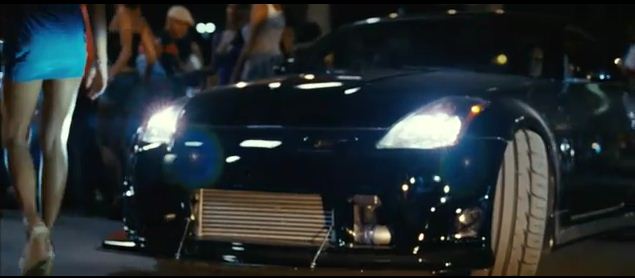
The trailer that I reviewed was the Fast Five trailer. This is the fourth movie of the Fast and Furious film series. This movie came out during the summer of 2011. Fast Five is based around street racing and how it has carried on into other parts of the world. This movie highlights the illegal aspects of street racing; such as, stealing cars, racing, and the police. I choose to review this trailer, because I enjoy the fast paced action portrayed in the trailer.

This trailer, like any other trailer, establishes the narrative of the movie. It establishes that the movie will take place in Rio De Janeiro, Brazil by using a fly over shot of Rio’s famous statue that sits on top of the mountain. The movie then reveals a sweat shop where money is being counted for drug dealers. It then introduces guns and police voice (Dwayne Johnson) to establish a conflict with the police and the main characters. Dwayne Johnson says “Don’t ever let them get into cars”, which highlights what fast and furious is known for, which is street racing. Vin Disel says “we will do one last job and then disappear forever”, suggesting that this is the last movie of the series. This quote is followed by a series of expensive cars being stolen off a train, establishing that the characters will steal in order to make their money. The trailer also reveals the old characters from prior movies who are back. This movie hints that Han did not really die in the seemingly fatal car accident during Tokyo Drift, or that this series takes place before Tokyo Drift.

 The cinematography adds to the high paced action expressed in the trailer. The fast and close up shots of the cars displays that the cars will being going fast in the movie. The track over the police lights while Dwayne Johnson is speaking establish Dwayne Johnson as the police who are after Vin Disel and his men. The P.O.V of the rocket launcher explosion adds to the action of the movie. The close up of Vin Disel and Paul Walker’s hands as they hook their winches onto what seems to be two metal bars. This creates curiosity in not displaying what they are hooking onto. Then a wide shot shows that the metal bars where actually part of a metal vault that is being pulled by two cars.
 The editing is what makes the trailer a high paced trailer. One of the best techniques is used at the end of the trailer where there is fast editing between different scenes that intertwine with a heart beat. As the heart beats become faster the cuts become faster and finally reveal the name of the movie.
The sound is also a crucial part when creating trailer, for it helps to reveal the situation and synchronizes with the action. In the beginning the cliché sound of a shotgun adds to the intensity of the robbery scene. The fast paced music that is infused with the sound effects of squealing tires reveals the fast plot and cars.

Monday, October 3, 2011
Run Lola Run Presos Critique: Editing
run lola run preso
The area that my group and I explored in Run Lola Run was editing. The editing style that I found Run Lola Run to be based off was a formalistic style. This film was a formalistic movie because it defies most classical editing techniques. One of the first things that makes this a formalistic style is the repeat of the same sequence of time 3 times by Twyker. There is a manipulation of time, because are 3 Acts of the same plot where the characters progress and realize their mistakes as the movie progresses. Formalism is also seen in the use of thematic montage of still frames. The abstract of formalism is also emphasized in the use of animation. One significant use of animation is when an animated character pulls the frame in just before the camera does a 360 around Lola as she thinks of who to ask for money. I also found the abstract to be in the breaking of the fourth wall by Papa shaking his head as Lola runs out of the frame. I also addressed parallel action and split screen. Parallel action and split screen are used in points of high tension, for example when the money bag and the phone are falling after Lola gets shot. I lastly examined cutting and how there were around 1500 cuts in Run Lola Run.
The area that my group and I explored in Run Lola Run was editing. The editing style that I found Run Lola Run to be based off was a formalistic style. This film was a formalistic movie because it defies most classical editing techniques. One of the first things that makes this a formalistic style is the repeat of the same sequence of time 3 times by Twyker. There is a manipulation of time, because are 3 Acts of the same plot where the characters progress and realize their mistakes as the movie progresses. Formalism is also seen in the use of thematic montage of still frames. The abstract of formalism is also emphasized in the use of animation. One significant use of animation is when an animated character pulls the frame in just before the camera does a 360 around Lola as she thinks of who to ask for money. I also found the abstract to be in the breaking of the fourth wall by Papa shaking his head as Lola runs out of the frame. I also addressed parallel action and split screen. Parallel action and split screen are used in points of high tension, for example when the money bag and the phone are falling after Lola gets shot. I lastly examined cutting and how there were around 1500 cuts in Run Lola Run.
I had some strengths in my presentation. I think one of my strengths was that I was able to not rely heavily on my notes. I was able to expand on my pictures and talk relative to my topic. I think I was also able to provide good facts about the movie, such as the average shot length of 2.7 seconds. I was also to have a somewhat good sense of film language.
I also had some weaknesses in my presentation. I feel that I did not use enough film language. This can be solved by further studying the advanced editing notes. Sometimes I strayed off topic with the breaking of the fourth wall, because it is not really an editing technique. I sometimes also said like and ummm, and I also didn’t always look at the audience when I was talking. I looked too much at the screen and not the audience.
Thursday, September 29, 2011
Film Treatment: Sands
Film Treatment: Sand
Logline: Boy is running through San Francisco attempting to tell his best friend that he likes her. Boy breaks fourth wall.
Girl and boy are sitting on a beach near sunset. They are looking out into the ocean. Girl says “look at this sand in my hand”. She cups the sand and lets its slowly siphon down until there is no more sand. She says this sand is like time it eventually runs out for all of us. The question or not is how we live our lives to the fullest. As the guy and girl leave the beach they part ways.
As the boy walks home he breaks the fourth wall and tells us about his life. His name is Tom and the girl’s name is Kelly. He and Kelly have been friends ever since they were small kids. Flash back to smaller kids on a play ground and they meet each other and are instantly friends after. Tom is a junior in high school and Kelly is a Senior. He and Kelly always enjoy each others company and they spend a lot of time with each other and their other friends.
Show progression of shots to show that the year is going by and then the year is almost over until it is summer time again. Tom and Kelly are on the beach again. Kelly tells Tom that she is going to leave tomorrow for college. Tom is sad but says alright and when they part ways they say good bye to each other.
The next day when the boy gets up his mom leaves a pile of pictures on his desk. Tom looks through the pictures and finds an old picture of him and Kelly. He breaks the fourth wall and tells the audience that he realizes his feelings for Kelly and wants to tell her before she leaves at 12 pm for UC Irvine. It is 11:00 pm and the boy realizes he must go to Kelly’s house fast so that he can tell her his feelings.
Tom runs out of his house and runs down the street. He finds the bus stop and waits as he looks at the time to make sure that he is not going to be late. As he is running he is having flashback memories of all the good times that he and Kelly had together. Tom encounters obstacles on the way and then he doesn’t make it in time to tell Kelly his feelings. He is sad but tells the audience that he tried his best and ended up failing.
Sunday, September 11, 2011
Broadcast Critique (how technology contributes to procrastination)
 Preproduction was extremely difficult. Me and max wanted to do something great or special, so we wanted a great idea. The only problem was that we couldn’t think of a great idea. One of our first ideas was the Casey Anthony case, but Mr. Bigue said that was too boring. Then finally we wanted to do a segment on procrastination, but also teachers using technology. I came up with this idea because I know procrastination is a big thing, but also I wanted to include ideas about a RSA segment that I watched about changing education paradigms. Max wanted it to be professional so we only envisioned one interview and voiceover. We decided to interview Ms. Gonzales because we had a conversation about the RSA segment with her before.
  I thought the overall quality of production was pretty good. Some of our most creative shots were the rack focuses, and the narrow depth of field shots. I enjoy isolating one person in a narrow depth of field shot, because it looks better and the person has less chance of noticing that you are recording them since you are farther away. One of the best shots was our interview segment with Ms. Gonzales. It was the first time I used the lighting kit, so I made some mistakes. It would have been better if she was more diagonal to the wall and she was framed more on the right side of my frame. Our audio came out good, but I was afraid that it might be horrible like it has been in the past. This was probably a benefit from using only one camera, and not the 7D that has great picture quality but poor audio.
  Our script wasn’t that great and had to be changed at the last moment. It turns out that we had two different topics that didn’t quite go together all in one segment. My favorite shot of Ms. Gonzales had to be removed because there was no relativity. It was a good thing that the voice over from before still flowed with the new interviews. I thought the voice over was compelling and related to our story. I liked the part about how we are living in the most stimulating era of human kind. I felt that the voice overs flowed well with the b-roll that showed kids doing hw, watching tv, and multi-tasking. The final thought that I want people to take into account are the tips on how not to procrastinate. Procrastination can be a great kid’s kryptonite.
 I thought the editing in our segment was decent. It reflected most of the segment, except for a rack focus shot we did in the beginning of a pencil sharpener. I felt that minimal transitions were necessary, for segments on tv just use cuts. We faded audio at the end, and I felt that transition was essential. The only effect that I used was the gain tool, which I never used before. It is extremely helpful, and I was able to get great audio quality by just boosting the gain.
Thursday, September 8, 2011
Character in Time

The man in this picture is an old man who is 71 years old. The man is fishing on his lawn chair on a platform. He is fishing at dusk, because dusk is one of the best times to fish. The old man is having a relaxing day after driving in his van that is parked next to him. The man is reflecting on his road trip. He then realizes that the moment that he is living in is extremely peaceful. The worries of life are erased from his mind and he is in total relaxation. He examines the beauty of the sunset and reminisces about a sunset in Vietnam. He and his comrade were sitting near the ocean in Vietnam watching the sun set over the ocean. They were both waiting for the helicopter to return them to base after their successful mission. The old man remembers the good times he had with his battalion during his service years in Vietnam. Then as the sun begins to fade he questions life. He realizes that life is beginning to fade away from him just like the sunset, because he is 71 years old. As he stares out into the horizon, he contemplates what he wishes to do before he passes.
Sunday, August 28, 2011
Cameria In Action Response
Too Fast by WongFuProductions
 The film that I analyzed was "Too Fast" by WongFuProductions. It is about a man named Brandon who likes to do everything in his life fast. Ever since he was little he has gone fast and there are positives and negatives to his speed. The short film plays around with time and physics, because Brandon is able to do outrageous things. An example is when he is able to go from home to drop off his friend in a second, and then in another second he is able to get a tapioca drink.

 The lighting in the short film was good, except for the restaurant scene. A high key light was used to light this scene, when a medium to low key light may have been a better choice. A high key light that is white contrasts to heavily with the low yellow lighting of the romantic restaurant shown in the first picture. I believe the high key light is too intesne because it creates an odd white light on Brandon as seen in the seocnd picture. A yellow or softer filter on the light may have made the scene better by preserving the continuity of the low lit romantic setting.
The final scene is my favorite scenes. The scene opens by using a pan movement while using lead room as Kelly walks to Brandon's car. The shot is out of focus as the pan begins, but the shot is in focus when Kelly gets into the car. This was probably caused by the presetting of the focus on Kelly as she was in the car before the shot started. The next portion of the scene is dialogue between Brandon and Kelly where medium close ups and selective focus are used as the two actors talk to each other. This seems to be a popular style throughout the movie. The cinematographer tends to use a narrow zoom position and create a blurry foreground and background, while leaving the midground clear. I enjoy this technique, because the shot is able to include all 3 aspects (foreground, midground, and background) by keeping the shot static without having to rackfocus or move the camera.

The next quick shots are of when Kelly realizes that they now have 2 kids only after a few seconds of talking to Brandon. A quick pan is used from Kelly to her new kid saying mommy. This is then followed by a quick cut to her face. The quick pan and cutting display the rush of suprise and horror that Kelly feels from having no kids to two kids in a second. Overall I felt that the cinematography was strong and the shot variation reflected the pace of the plot.
Subscribe to:
Posts (Atom)